
How to Choose AI Content Tools: Complete Guide to Building Your Toolkit
The explosion of AI content creation tools presents both tremendous opportunity and decision paralysis for modern content creators. With hundreds of platforms promising to revolutionize workflows, learning how to choose AI content tools effectively becomes essential for success. Building an effective AI toolkit requires understanding your specific needs, evaluating tool capabilities objectively, and strategically combining platforms that complement rather than duplicate functionality.
Assessing Your Content Creation Needs
Effective tool selection begins with honest assessment of your content requirements, production volume, and skill gaps. Different creators have vastly different needs—a solo blogger creating weekly articles requires different tools than a marketing team producing daily social media content, video ads, and email campaigns. Understanding your specific workflow bottlenecks, quality standards, and budget constraints prevents wasting resources on impressive but ultimately unnecessary capabilities.
Content volume directly impacts which tools provide value. High-volume creators benefit from tools offering unlimited generation or enterprise pricing that reduces per-unit costs. Low-volume creators might prefer pay-as-you-go models that don't require monthly subscriptions for occasional usage. Consider your production frequency across different content types—if you create daily social posts but weekly videos, your social media tools should prioritize scalability while video tools can focus on quality over quantity.
Skill assessment helps identify where AI provides maximum value. If you're a strong writer but weak designer, investing in image generation tools like those on our image generator comparison delivers more impact than writing assistants. Conversely, skilled designers might prioritize AI writing tools to balance their strengths. AI excels at compensating for skill gaps, enabling solo creators to produce professional multi-media content that previously required specialized team members.
Understanding AI Content Tool Categories and Use Cases
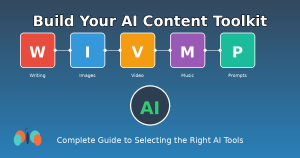
When you choose AI content tools, understanding the distinct categories helps you build a comprehensive toolkit. Writing assistants featured on our comparison page generate and edit text content from blog posts to ad copy. Image generators create visual assets including graphics, illustrations, and photos. Video creation tools on our comparison automate video production from editing to generation. Music creators produce royalty-free audio as detailed on our music tool comparison. Specialized tools handle niche needs like prompt optimization through our optimizer comparisons and content verification via our detector tools.
Most creators need multiple tool categories to produce complete content projects. A YouTube creator typically requires video editing AI, thumbnail generators, script writing assistants, and music creation tools working together. A marketing professional might combine writing assistants for ad copy, image generators for creatives, and analytics AI for optimization. Understanding how tools complement each other enables building cohesive toolkits greater than the sum of individual platforms.
Workflow integration determines practical usability. Some creators prefer all-in-one platforms that handle multiple content types through unified interfaces, accepting some specialization compromise for convenience. Others build best-of-breed toolkits selecting the optimal tool for each function despite managing multiple platforms and learning curves. Your tolerance for complexity, technical proficiency, and existing tool ecosystem should guide this fundamental architecture decision.
Evaluation Criteria for AI Tools
Output quality represents the most critical evaluation criterion when you choose AI content tools. No amount of convenience or affordability justifies tools producing substandard results. Test tools extensively with your actual use cases before committing to subscriptions. Generate diverse content types, evaluate consistency across multiple attempts, and compare results against manually-created alternatives or competitor tools. Quality perception is somewhat subjective, so trust your judgment about whether outputs meet your standards rather than relying solely on marketing claims or reviews.
Ease of use significantly impacts productivity. Powerful features become worthless if accessing them requires extensive technical knowledge or convoluted workflows. Evaluate interface intuitiveness, learning curve steepness, and time required to achieve desired results. The best tools balance capability with accessibility—sophisticated enough to produce professional outputs yet simple enough that you'll actually use them regularly rather than abandoning them after initial enthusiasm fades.
Reliability and consistency matter tremendously for professional applications. Tools that produce exceptional results sometimes but mediocre outputs frequently create unpredictable workflows requiring extensive contingency planning. According to Gartner's research on AI adoption, consistency ranks among the top factors enterprises consider when evaluating AI tools. Assess consistency across multiple sessions, different prompts, and varying content requirements. Professional reliability means you can confidently base deadlines and commitments on tool capabilities without anxiety about unexpected failures or quality variations.
Cost Structure Analysis
AI tool pricing varies enormously from free tiers to enterprise solutions costing thousands monthly. Evaluate total cost of ownership beyond headline subscription prices. Consider usage limits, per-generation charges, commercial licensing fees, and costs for accessing advanced features or higher quality outputs. Calculate monthly costs based on realistic usage projections—a "cheap" tool with strict limits might cost more than a premium unlimited subscription for high-volume needs.
Free tiers serve valuable purposes for testing and light usage but often carry significant limitations. Common restrictions include watermarked outputs, low resolution, generation caps, prohibited commercial usage, or long queue times. Understand exactly what free access provides before building workflows dependent on free tiers that might disappear or prove inadequate at scale. Many creators strategically combine free tools for experimentation with paid subscriptions for production content.
Consider pricing trajectory as platforms mature. Early-adopter pricing sometimes increases substantially as services gain popularity and refine business models. Conversely, intense competition in crowded categories like AI writing might drive prices down or expand free offerings. Annual subscriptions often provide 15-30% discounts compared to monthly billing while locking you into platforms before fully validating long-term value—balance commitment risks against savings.
Platform Reputation and Stability
Platform longevity matters increasingly in the rapidly-evolving AI landscape. Startups offer innovative features but face higher shutdown risks than established technology companies. Research company funding, user base size, and business model sustainability before investing heavily in workflows dependent on specific platforms. Diversifying across multiple tools for critical functions provides backup options if your primary platform discontinues service or deteriorates in quality.
Community size and activity indicate platform health and resource availability. Active user communities provide troubleshooting assistance, share best practices, create tutorials, and pressure developers to address issues and add features. Platforms with thriving communities typically offer better long-term value than technically superior but isolated alternatives. Check community forums, social media presence, YouTube tutorial availability, and user-generated resource abundance before commitments.
Update frequency and feature development reveal platform commitment to improvement. Regular updates fixing bugs, adding capabilities, and responding to user feedback demonstrate healthy development that promises improved value over time. Stagnant platforms that haven't released meaningful updates in months may indicate development abandonment or shifting priorities that could leave users with outdated capabilities in fast-moving AI markets.
Strategic AI Content Tool Combinations
Building comprehensive toolkits requires strategic complementarity. Core content generation tools handle primary creation—writing assistants for text, image generators for visuals, video creators for multimedia. Supplementary tools fill specific gaps: prompt optimizers improve core tool outputs, AI detectors verify content authenticity, music creators provide audio elements. This tiered approach allocates budgets efficiently, prioritizing tools delivering direct content output while strategically adding specialized capabilities as needs emerge.
Workflow automation tools multiply AI content tool value by streamlining processes between creation stages. Platforms like Zapier, Make, or direct API integrations enable automated workflows—blog posts automatically generating social media summaries, finished videos triggering thumbnail creation, published content initiating distribution sequences. These automation layers transform individual AI tools from standalone applications into integrated production systems that require minimal manual intervention.
Consider platform ecosystems when selecting tools. Some AI platforms offer comprehensive suites covering multiple content types through unified subscriptions and interfaces. Adobe's Firefly integrates across Creative Cloud, Canva provides AI features within their design platform, and Jasper offers multiple content types through single subscriptions. These ecosystems provide convenience and often cost advantages compared to separate best-of-breed tools, though specialized platforms may excel in specific capabilities.
Testing and Validation Process
Systematic testing prevents costly mistakes when you choose AI content tools. Create standardized test cases representing your actual content needs—typical blog topics, representative image requirements, common video styles. Run identical tests across competing platforms to enable objective comparisons. Evaluate results against specific criteria: accuracy, tone appropriateness, visual appeal, time required, prompt iterations needed. Document findings to inform decisions and track performance as platforms evolve.
Trial periods enable risk-free evaluation before financial commitment. Most AI platforms offer free trials, money-back guarantees, or free tiers sufficient for meaningful testing. Maximize trial value by using realistic workloads rather than simple experiments. Create actual content you'll publish, test edge cases and challenging requirements, and evaluate customer support responsiveness during trials. Use this hands-on experience to validate marketing claims and identify potential issues before subscription commitments.
Benchmark performance against current workflows. Calculate time savings, cost reductions, and quality improvements AI tools deliver compared to your existing processes. Some tools provide dramatic efficiency gains while others offer marginal improvements insufficient to justify adoption costs and learning curves. Honest performance benchmarking based on your actual workflows prevents succumbing to hype about theoretical capabilities that don't translate to practical value for your specific needs.
Learning Resources and Skill Development
Tool effectiveness depends heavily on user skill. Invest time learning optimal usage patterns, best prompting techniques, and advanced features that separate power users from casual adopters. Most platforms provide official tutorials, documentation, and training resources—work through these systematically rather than intuiting functionality through trial and error. This structured learning accelerates proficiency and reveals capabilities you might otherwise never discover.
Community resources often provide more practical guidance than official documentation. YouTube tutorials, Reddit communities, Discord servers, and dedicated Facebook groups offer real-world tips, workflow examples, and troubleshooting assistance from experienced users. These community resources share prompt libraries, templates, and techniques that dramatically accelerate learning curves while avoiding common pitfalls that frustrate beginners.
Prompt engineering skills multiply across different AI platforms. Time invested mastering effective prompting techniques for one tool transfers partially to other platforms, though each tool has optimization nuances. Our prompt optimizer tools help develop these cross-platform skills while platform-specific communities provide targeted guidance for extracting maximum value from individual tools.
Security and Privacy Considerations
Content security varies dramatically between AI platforms. Some tools train their models on user inputs, potentially incorporating your content into future outputs accessible to other users. Others guarantee data privacy, never using your content for training or storing it after processing. Review privacy policies carefully before uploading sensitive business information, proprietary content, or client materials to AI platforms. Enterprise tiers typically offer stronger privacy guarantees than consumer subscriptions.
Copyright and ownership terms require careful attention. Most AI platforms grant you ownership of generated content, but some retain rights to outputs or your input data. Industry analysis from Forrester Research highlights intellectual property as a critical consideration for commercial AI adoption. Understand intellectual property implications before using AI tools for commercial projects, particularly high-value applications like advertising campaigns or published works. Ambiguous ownership terms might create legal complications if content achieves unexpected commercial success.
Data retention policies affect long-term security. Platforms storing your prompts, generated content, and usage patterns indefinitely create privacy exposure if breached. Tools offering data deletion capabilities or minimal retention periods reduce these risks. Consider what information you're comfortable leaving permanently associated with your accounts when evaluating platforms for sensitive applications.
Future-Proofing Your Toolkit
AI technology evolves extraordinarily rapidly. Tools considered cutting-edge today become obsolete within months as new capabilities emerge. Build flexibility into your toolkit by avoiding complete workflow dependency on single platforms. Maintain familiarity with competing tools, monitor new entrants offering breakthrough capabilities, and regularly reassess whether your current toolkit remains optimal or whether better alternatives have emerged.
API-based access provides more stability than platform-specific interfaces. When possible, access AI capabilities through APIs rather than solely through vendor platforms. This approach enables switching underlying AI models or providers without completely rebuilding workflows. API integration requires more technical sophistication but delivers significant flexibility advantages for creators managing complex production pipelines.
The democratization of AI content creation continues accelerating. Tools that seem revolutionary today will become commodity features tomorrow. Focus less on specific platform capabilities and more on developing fundamental AI collaboration skills—effective prompting, quality evaluation, strategic tool application, and workflow optimization. These transferable skills remain valuable regardless of which specific tools dominate in coming years.
Frequently Asked Questions About Choosing AI Content Tools
What are the best AI content tools for beginners?
For beginners, start with user-friendly all-in-one platforms that offer free tiers. Tools like ChatGPT for writing, Canva for design with AI features, and CapCut for video editing provide accessible entry points. Focus on mastering one tool in each category before expanding to specialized platforms.
How much do AI content tools cost?
AI content tool pricing ranges from free tiers to $200+ monthly for professional subscriptions. Most quality tools cost $10-50 per month for individual plans. Budget $50-150 monthly for a comprehensive toolkit covering writing, images, and video. Many platforms offer annual discounts of 15-30%.
How do I test AI content tools before buying?
Use free trials and free tiers to test tools with your actual content needs. Create realistic projects you'd actually publish, not simple experiments. Test consistency across multiple sessions, evaluate output quality against your standards, and assess ease of use. Most platforms offer 7-14 day trials or money-back guarantees.
Can I use multiple AI tools together?
Yes, combining multiple AI tools often produces better results than relying on a single platform. Use specialized tools for their strengths—one for writing, another for images, a third for video. Workflow automation platforms like Zapier can connect different AI tools to streamline your production process.
Do AI content tools require technical skills?
Most modern AI content tools are designed for non-technical users and require no coding knowledge. Success depends more on learning effective prompting techniques and understanding each tool's specific features. Invest time in tutorials and community resources to maximize tool effectiveness.
Building Your Optimal AI Toolkit
Learning how to choose AI content tools effectively represents an ongoing process rather than one-time decision. Start with tools addressing your most pressing needs and budget constraints. Experiment with free tiers and trials to identify which platforms deliver genuine value for your specific use cases. Gradually expand your toolkit as you validate tool effectiveness, develop proficiency, and identify new capabilities that enhance your content quality or production efficiency.
Explore our comprehensive tool comparisons across all major AI content categories to discover platforms matching your requirements. From writing assistants and image generators to video creators and music tools, understanding available options enables informed decisions that maximize your content creation capabilities while optimizing investment across tools delivering the highest return for your specific needs. The future of content creation combines human creativity with AI capability—build your toolkit strategically to thrive in this AI-augmented landscape.